

WHO I AM
A Letter to Prospective Investors in Yucatan Blue
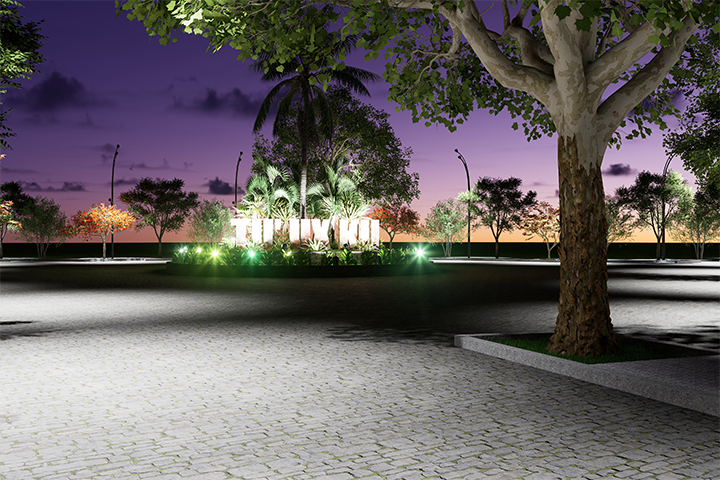
The Intentional Town of Tu Ux Ku
My name is Stephen Bliss, and for more than 35 years I have lived in the intersection of architecture, development, psychology, community-building, and human resilience. I have designed everything from small homes to entire neighborhoods, from regenerative farms to social systems, from community organizations to what is now a prototype for one of the first human-centered smart towns in the world: Tu Ux Ku.
I did not arrive here through a conventional path.
I began my career at Purdue University studying construction technology and architectural design. While my classmates focused on coursework, I was already building homes, working with real clients, and bringing active projects into the classroom. My business grew faster than expected, and I chose to pursue it fully rather than finish the degree. I became both a designer and a builder — learning early that architecture is not drawings, but human lives shaped by form, space, and experience.
But from the beginning, I was equally interested in people as I was in buildings.
Searching for the Human Thread
Even while designing homes in Northwest Indiana, I was studying psychology, behavior, and the invisible systems that shape communities. I volunteered, led service projects, and observed what created dignity — and what destroyed it.
This search took me into community development work, first through a para-church organization, then through a government development corporation in Indianapolis. These environments exposed me to a deep truth:
human nature is complex, and people will either build or break systems depending on the incentives and the culture around them.
I began studying rural and urban decline, learning that decay is not a failure of materials but a failure of vision, leadership, and collective identity.
Rebuilding a Community, Human First
When I discovered a declining neighborhood near downtown Indianapolis, I didn’t begin with drawings — I began with conversations. I went door to door collecting data, learning histories, understanding loss, and reawakening possibility.
I created a redevelopment plan that aligned resident hopes with banking requirements for reinvestment. I bought every vacant parcel and non-owner-occupied home. I formed a neighborhood association run by homeowners, not outsiders. I restored homes, added new ones, and rebuilt the streetscape — but most importantly, I rebuilt the social fabric.
The transformation was stunning.
Before redevelopment, the streets were silent. Afterward, neighbors filled their front porches, conversations spilled into sidewalks, and a genuine community reemerged. What once took me ten minutes to walk took an hour because people wanted to engage. The architecture unlocked the human connection.
The neighborhood became a national example of for-profit community development done right. We won awards for design and impact, and the City of Indianapolis offered a financial partnership.
This confirmed something I still believe:
Buildings don’t create communities. Communities create communities. Architecture simply gives them a place to flourish.
Human-Centered Design: Influenced by Masters
During this time, I absorbed the work of Christopher Alexander — whose insights into the psychology of space, pattern language, and the dignity of human-scale design permanently shaped my philosophy. Alexander taught me that architecture must do more than “look good.” It must:
- foster interaction
- nourish wellbeing
- elevate purpose
- honor human presence
Every project I have touched since carries this DNA.
And another book became foundational:
Building Communities from the Inside Out by Kretzmann & McKnight.
It taught me that community renewal is not socio-economic — it is human. Every place has assets. Every person has capacity. External solutions are fragile; internal solutions endure.
This became the core of my development philosophy.
Global Perspective: Four Countries, One Truth
After years of recognition and success, I sold everything and moved my family to Costa Rica. I wanted my children to experience a world not defined by consumption, and I wanted to understand communities outside the American paradigm.
I worked in tourism development, then shifted to Panama to partner with indigenous communities — some of the poorest populations on earth. They lived on less than a dollar a day, yet they possessed resilience, discipline, community cohesion, and spiritual grounding that Western societies have largely lost.
The pattern repeated:
wealth does not create resilience; connection does.
poverty does not destroy people; disconnection does.
Working with them, I discovered their soil was depleted by generations of poor farming. In solving that problem, I accidentally created the first closed-loop agricultural ecosystem in Central America. This system drew the attention of agronomists, governments, universities, and the Smithsonian. I lectured on resilience, food security, and social vulnerability to visiting researchers.
From their questions, I learned an unexpected truth:
the more advanced the society, the more fragile the individual.
These years became a living laboratory of human systems, resilience, and design for survival.
Toward a New Kind of Community
Across four countries, decades of development experience, multiple economic systems, and diverse demographics, I began to see the full picture:
A community — or a city — thrives when it is:
- human-scale
- purpose-driven
- psychologically coherent
- connected to nature
- architecturally intentional
- economically balanced
- culturally expressive
- resilient by design
When any of these fail, decline follows.
Tu Ux Ku is the culmination of all this work.
Why Tu Ux Ku Exists
Tu Ux Ku (Yucatán Blue) is not a real estate project.
It is a demonstration of what cities must become in a world facing:
- rapid urban growth
- infrastructure collapse
- psychological fragmentation
- climate instability
- economic volatility
- community dissolution
- loss of meaning and belonging
Its design is informed by:
- architectural mastery from Christopher Alexander
- community principles from Kretzmann & McKnight
- field experience with indigenous resilience
- applied psychology and human behavior
- regenerative agriculture
- decades of real-world development
- and a deep respect for nature and culture
Tu Ux Ku is built not just to house people, but to heal them.
To reconnect them.
To remind them what living well actually feels like.
It is a lighthouse — a working model for developers, governments, planners, and communities around the world.
This is who I am.
I am not a conventional developer.
I do not build products — I build ecosystems.
I do not build for the market — I build for the human being.
I do not design structures — I design places where people can thrive.
And everything in my life has pointed to this moment.
Tu Ux Ku is not the biggest project of my career.
It is the most important one.
I invite you to help bring it into our world.
— Stephen Bliss